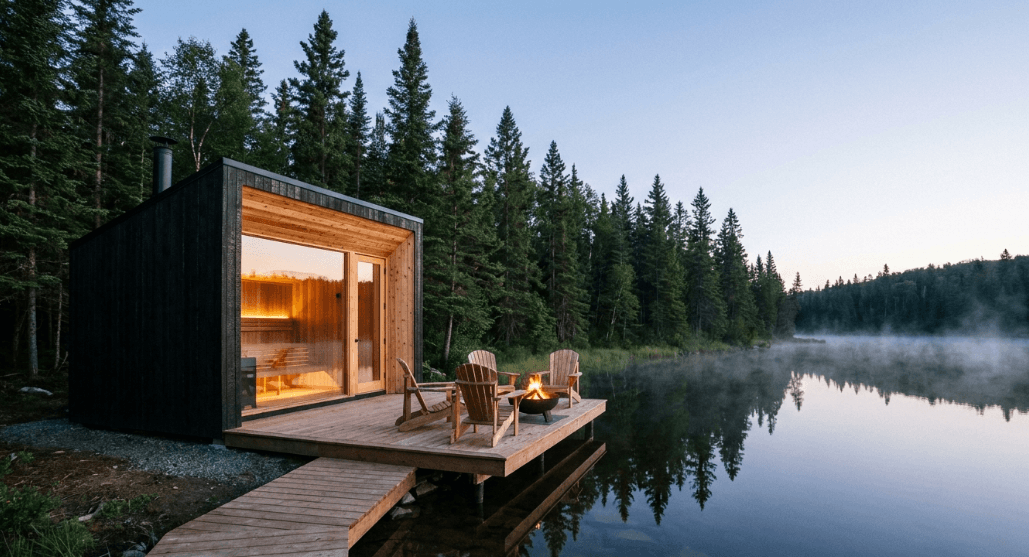
Most outdoor saunas sit on one of three surfaces: a poured concrete pad, a compacted gravel base 4 to 6 inches deep, or a properly built wood or composite deck rated for the unit’s weight. Each option works as long as the surface is level, drains water away from the base, and sits above grade so the sauna’s floor stays dry. Bare dirt or grass is the one option to avoid long term, since it holds moisture against the structure and rarely stays level. The right choice mostly comes down to budget, local drainage, and whether the sauna needs to be movable later.
Why Does the Base Matter So Much for an Outdoor Sauna?
A sauna sitting on an uneven or poorly drained surface develops problems that are easy to avoid and expensive to fix later: doors that stop closing flush, water pooling against the base, and wood floors that stay damp long after a session ends. Because the structure cycles between hot and humid inside and whatever weather is happening outside, moisture management at the base is arguably as important as the insulation inside the cabin. A level, well-drained foundation also keeps the door seal working correctly, since even a slight lean can be enough for a door to stop sealing tightly against its frame, which lets heat escape and wastes electricity every single session.
Is a Concrete Pad Worth the Extra Cost?
A poured concrete pad, typically 4 inches thick with basic reinforcement, is the most permanent and stable option, and it handles heavy barrel or cabin saunas without settling over time the way gravel occasionally does in wet climates. Cost runs higher than gravel, often $6 to $12 per square foot installed depending on region and site prep, and it is not easily undone if the sauna is ever moved or removed. For anyone certain about long-term placement and living somewhere with heavy rain or freeze-thaw cycles, concrete is usually the lowest-maintenance choice over a ten-year horizon, even though it costs more upfront than gravel or pavers.
How Does a Gravel Base Compare?
Compacted crushed gravel, typically 4 to 6 inches deep over an excavated and leveled area, is the most common budget-friendly base for a barrel or cabin sauna, usually running $3 to $6 per square foot for materials and labor. Gravel drains extremely well, which matters more for a sauna than for most outdoor structures, and it can be reworked or releveled fairly easily if the sauna ever needs to shift position. A paver or plastic grid base layered on top of the gravel adds stability and a cleaner finished look without the permanence of poured concrete. The main tradeoff is that gravel needs occasional attention if it settles unevenly, which concrete generally does not.
Can a Sauna Sit on an Existing Deck?
An existing wood or composite deck can work, provided it is structurally rated for the sauna’s weight, which for an assembled barrel or cabin unit often runs 600 to 1,200 pounds concentrated in a relatively small footprint. Checking joist spacing and load rating with a contractor before placing a heavy sauna on an older deck avoids a sagging or unsafe result months down the line. Decks also need a clear path for the electrical run to reach the heater, which is sometimes more complicated on an elevated structure than a ground-level pad. For a newer deck built with the sauna’s weight in mind from the start, this is often the most convenient option, since it keeps the walk from the house short and dry.
What Should Buyers Confirm Before Choosing a Base?
Local frost depth, drainage patterns on the specific site, and whether the structure counts as permanent under local building code are all worth checking before pouring concrete or ordering gravel, since requirements vary meaningfully by region. Retailers that specialize in outdoor sauna kits often publish base requirements and weight specifications for each model, and reviewing those figures at sweatdecks.com/collections/outdoor-saunas before finalizing a base plan helps match the foundation to the actual unit rather than a generic guess. A quick call to the local building department, which usually takes only a few minutes, clarifies whether a permit is required for the chosen base type before any digging starts.
What Does the Broader Research Say About Getting Consistent Use From a Sauna?
A solid, well-drained base is a practical detail, but it connects to a bigger point: a sauna that develops maintenance problems tends to get used less over time, which undercuts the reason most people buy one. A 2018 review in Mayo Clinic Proceedings summarized cardiovascular associations tied to regular sauna bathing, and a 2023 follow-up review in the same journal looked at whether combining sauna use with other lifestyle habits added further benefit. A separate systematic review in Evidence-Based Complementary and Alternative Medicine reported comparable associations for regular dry sauna use. These findings are built on consistent, repeated use over years, which is a strong practical argument for spending a bit more on a base that will not need to be redone in three years because water damage forced the issue.
Frequently Asked Questions
Is a concrete pad required for an outdoor sauna? No. A compacted gravel base, pavers, or a properly built deck all work as long as the surface is level and drains water away from the base.
Can an outdoor sauna sit directly on grass or dirt? Not recommended long term. Bare soil holds moisture against the underside and rarely stays level as the ground shifts.
How thick should a gravel base be under a sauna? A common approach is 4 to 6 inches of compacted crushed gravel over a leveled excavation.
Does a sauna need a footing below the frost line? It depends on local code and whether the structure is considered permanent; checking with the local building department is worth the time.
References
- Cardiovascular and Other Health Benefits of Sauna Bathing: A Review of the Evidence, Mayo Clinic Proceedings, 2018
- Does the Combination of Finnish Sauna Bathing and Other Lifestyle Factors Confer Additional Health Benefits? A Review of the Evidence, Mayo Clinic Proceedings, 2023
- Clinical Effects of Regular Dry Sauna Bathing: A Systematic Review, Evidence-Based Complementary and Alternative Medicine, 2018